

The World Of Shisha Cultures: Maklaud X HookahBattle
This year we plan to launch a limited collaborative shisha model togeather with Maklaud, this shisha will represent our HookahBattle Mission:
help hookah workers from different countries meet regularly, communicate with each other, carry out cultural exchange, – and also immerse themselves in the atmosphere of celebration, friendship and sports competition.

An 8-sided column at the bottom and an 8-sided column at the top hold the globe in the middle.
Each facet of the column will represent a specific hookah culture from a specific region of the world.
We travel across the different countries and we understand that different regions of our planet have a different shisha cultures concepts. Since Im from Russia, I will give an example of Russian shisha culture specifics:
1. Combination of Chineese tea with a shisha smoking.
Reason: first shisha lounges in Eastern Europe region originaly grows from Tea Rooms (specific place where you can rest and drink a big range of tea selection especialy from China). This year we are gonna celebrate 20 years of “Shisha Lounges of St. Petersburg” community, which been founded by Oleg Knyaginin. Place where we gonna celebrate it? “Tea House” – on of the first shisha lounges in St. Petersburg

2. No foil, HMD smoking.
Reza Bavar (read my interview) – revolutionized global shisha market with his concept of Kaloud Lotus. His technology has become one of the integral attributes of Russian hookah culture. Technology. Not his product. And thats the drama.

3. “Hookah Master” as a term. Hookah Master as a psychotherapist.
In many countries when you visit a shisha lounge and place an order to have a shisha smoke session you will dont even see the guy who will pack a bowl for you. Russian lounges have made it really different taking idea from bartender culture. The main job of Shisha Master is to ask his guest questions to find out their needs and prepare the perfect bowl with 100% guest taste expectations. Some lounges even go far about it and train their ShishaMaster to be the guests psychotherapist: a guy who can talk with you about your hard work day. I belive the pioner of such an idea been Garik Konovalov in 2013 when he have launched his chain of lounges “Unique Hookah Places” across all the Russia. Its been hard to find their lounge (you could get in only with personal invitation) and the main value of visiting been – talks with shisha masters. Moreover Garik have proposed an idea to celebrate The International Day of Shisha Master on 1st July. You can send him a message in Instagram and ask why its 1st July (nobody knows including me).

4. Endless love for Dark Leaf Shisha tobacco
In 2011 Russians get in love with crazy american product – Tangiers Dark Leaf shisha tobacco. I remember a lot of talks on old shisha forums. I remember first contestants of HookahBattle presenting bowls with Tangiers. Nowadays Russia have around 100 local manufacturers of Dark Leaf shisha tobacco products. A great case how another techology became a part of Russian shisha culture. But hey, Tangiers is still the leading imported shisha product for Russian market.

5. Stainless steel hookahs
I remember how we started our hookah business in the second half of the 2000s with Syrian iron powder hookahs. Its been better than first Chinees shishas but iron powder accamulates flavor / rusts and oxidizes / breaks down. From the other hand its been very cheap and nice looking.

The GodFather of Russian Shisha Models industry – Ivan Botanov (OtIvana brand) been known as a guy who can upgrade your Mya Saray shisha.

MYA been the best staneless steel stems on the market but had only 1 problem – quality of inhale. Ivan been the guy who can fix it. Me and Ivan 2026:

See that silicone mouthpiece on the lanyard around Ivan’s neck? Ivan is the man who invented this idea.
In 2012 Ivan have launched his own brand “OtIvana” a combination of avial and stainless steel shisha model with perfect quality of inhale. Back in 2012 I told him “you are crazy, nobody will buy it for such a high price”.

I was wrong. Inspired by Ivan success nowadays you can find dozens of Russian shisha models manufacturers brands who use the same material and technology. After a several years Russian manufacturers killed #1 company of Russian shisha industry – MYA distributor (guess it happens in 2019). In 2017 I have had a meeting with the leader of MYA company in the USA shisha expo – Mr. Badawi asking a question why they dont want to fight with growing russian shisha models brands focusing on stainless steel models. He replied me:
“Our main clients are from Middle East and we have our own shisha culture we are focusing: one shisha for 1 flavor with not stainless steel but with a type of metal that absorbs taste”
6. Silicon hoses
Silicon hoses for shisha been invented at 00s by Meduse Design Czechian company and been presented by their russian distributor “Art Smoke” (predecessor of Darkside Corporation). Ivan Batanov been one of the first ambassadors of silicon hoses in Russia making own model of medical silicon hose + glass mouthpiece

7. Franchise of shisha lounges
The very first idea of a shisha lounge franchise concept belongs to one of the godfathers of the European shisha market — Piotr Śliwiński from Poland, who launched one of the first lounge franchises in the 2000s with the Buszek chain. Piotr was also the author of the concept of creating a separate tobacco and syrup-based shisha product (Doobacco)

As about Russian market, without false modesty, its been me with Nargilia lounge chain: 2009-2017, more than 150 franchises sold in 6 countries. The project was closed due to my management mistakes (write a comment if you want a full story)

The very first does not mean the best. (By the way Im looking for investor to re-launch the concept of Nargilia International franchise operator – DM me for more details)
Nowadays, HookahPlace has more than 250 lounges in over 30 countries, making it the largest international lounge chain in the world. DM me if you want to open a HookahPlace lounge franchise on a special terms

There are many other franchise lounge concepts from Russia (Tangiers Lounge, Myata, etc.), and I can definitely consider them part of the local shisha culture
8. Professional Awards
O yes this is a definitely spiritual bond of Russian shisha culture. I cant say JohnCalliano been a pioneer of professional awards, but their team have made it really famous and stylish. Nowadays most of famous Russian bloggers have own annual Awards.

9. Shisha cocktails
I have mentioned before the Russian distributor of Czech Meduse Design shishas, the company ‘Art Smoke,’ which introduced silicone hoses, but this was not their biggest contribution to the global shisha industry. Back into 00s they could be stupid and act as any regular distributor – just import products and do sales (Meduse pipes). But they’ve been smart and have created the new value of product – they’ve been the authors of wonderfull Shisha Cocktails with luxury outsourcing and catering services for best Moscow restaurants:

10. Shisha tobacco ambassadors
Ispiried by Cigar industry, Satyr – shisha tobacco brand from St. Petersburg been the pioneer of Shisha tobacco ambassadors idea. Ambassador is the guy who visit shisha lounges and shisha shops to make a product presentation for management and guests. Nowadays most of Shisha Tobacco brands use the business idea of ambassadors.

- I have already shared my vision of Russian shisha culture.
- I want you to go to the comments under this article and share your view of your country’s shisha culture, along with its key attributes.
- Please format it as bullet points, with one point for each attribute.
- The problem is that people who do not travel cannot really answer such a request, because they do not have a basis for comparison.
- If you know your local specifics and also travel enough to understand the differences, then you are the right person to take part in this discussion.
All the good commentators will be granded with a nice gifts personally from me. Which countries are we most interested (by rank of the most registered contestant teams from HookahBattle database):
1. USA (124 teams)
2. Brazil (97 teams)
3. Spain (95 teams)
4. Ukraine (87 teams)
5. Germany (67 teams)
6. China and Hong Kong (127 teams)
7. Czechia (54 teams)
8. Turkey (49 teams)
9. Japan (40 teams)
10. Taiwan (38 teams)
11. Kazakhstan (37 teams)
12. Belarus (31 teams)
13. UK (29 teams)
14. Uzbekistan (22 teams)
15. India (21 teams)
16. Bulgaria (19 teams)
17. Australia (18 teams)
18. France (18 teams)
19. Indonesia (15 teams)
20. UAE (11 teams)
21. Poland (9 teams)
22. Slovakia (8 teams)
23. Iraq (8 teams)
24. Greece (7 teams)
25. Switzerland (7 teams)
17 Comments
Quer adicionar um comentário? Comentários e votações só estão disponíveis para membros do < br> que já são membros do Business club? Log in.


I was hoping to see Greece on the list, and here we are — 24th place. Although I dream of one day reaching greater heights, I can still share my view of my country’s current shisha culture and its key attributes. I’ve travelled all around Greece and smoked in most of the well-known lounges, even reviewing some of the most famous ones individually. I’ve also smoked in several countries including Germany, the USA, the UAE, Serbia, Turkey, and more. Let’s get into it:
1. Shisha culture suffers because of tobacco laws.
In Greece, hookah tobacco is categorized as regular tobacco and taxed by the gram for every pack, making it extremely expensive and discouraging both foreign tobacco companies and the key players in the Greek shisha market from importing their products. Not only are there too few brands and options to choose from, but counterfeit, low-quality tobacco thrives. Hookah lounges can buy this cheap tobacco, resell it, and make a big profit. As a result, most of the Greek shisha community is unfamiliar with premium brands and accustomed to smoking “bad” shisha.
2. Shisha is everywhere, but social smoking dominates.
Even with the lack of quality tobacco and the rise of fakes, shisha is everywhere — in cafés, restaurants, clubs, lounges, beach bars, even barber shops, and other places you wouldn’t expect. Greece is a country of contradictions. People smoke shisha socially all the time, but only a tiny percentage of those social smokers smoke at home.
3. Lounges have great hookah arsenals.
Another contradiction. While lounges mostly offer limited, questionable-quality tobacco, they have incredible hookahs and accessories — more than you’d see in most countries in the world. Premium models such as exclusive Wookahs, Animas, and Meduses — hookahs worth thousands of euros — are paired with terrible tobacco. This, in my opinion, is what truly kills the development of shisha culture in Greece.
4. People smoke lightly and aren’t willing to change that.
Through years of travelling, smoking, and being influenced by Russian shisha culture, I’ve developed a love for dark leaf tobacco. In Greece, fewer than 10% of hookah smokers prefer dark leaf. People gravitate toward lighter, blonde leaf options, partly because that’s what they’ve been taught to smoke. What’s interesting is that most people aren’t even willing to try dark leaf — it’s treated as a sort of taboo. They often confuse dark leaf with “weed,” because mavro, the Greek word for black (as in dark leaf), is also slang for cannabis.
5. There are few enthusiasts, but they’re hardcore.
Although most Greeks are social smokers, there’s a small group of true hardcore enthusiasts. Because of the tobacco issues described above, they turn to the black market — mostly for Russian tobacco — to keep up with Russian shisha culture. They’re often connected to each other across the country, forming a kind of sub-community, a “cult” of shisha enthusiasts who know and respect one another.
6. Different cities have different smoking habits.
From Athens to Thessaloniki, and out to Chalkidiki and Crete, each region has its own smoking preferences, shaped by the leading lounges in the area. In general, people in the North enjoy smoking “harder” — overpacking the tobacco — while in the South, the style is lighter and more underpacked.
7. The shisha community loves drama.
The three biggest shisha “markets” in Greece are Athens, Thessaloniki, and Crete, and they all seem to envy each other. I won’t elaborate, but I’m sure any Greek who reads this and is plugged into the shisha scene will know exactly what I mean.
8. The shisha community is fading.
During COVID-19 and the quarantines, Shisha culture was on the rise — people were starting to smoke at home and dive into the shisha world. A few years on, with the continued lack of quality tobacco available for home use, the community seems to be getting weaker every year. Retail and wholesale hookah stores are struggling as fewer people smoke at home. As a result, fewer new hookah products reach the Greek market, which appears to be surviving on charcoal sales and the seasonal summer surge from tourist hotspots.
9. There are no hookah bloggers — and no support system for them.
Having been one of the biggest Shisha influencers in the country and dare I say the only one still active who isn’t associated with a lounge or shisha store, I can confidently say there’s no support system for bloggers here. Stores and lounges don’t seem to care about advertising; they most likely see it as an unnecessary cost. As a result, hookah bloggers must pay for everything they review themselves to keep up with their passion — which can be both exhausting and expensive.
10. There aren’t enough events or happenings.
A few years back, when the community was still growing, there were real efforts to organize events — chef’s tables, tobacco brand presentations, small hookah expos, and contests here and there. In recent years, those efforts have been minimal, and initiatives to bring the shisha community together have dwindled to almost nothing.
I could keep going, but I don’t want to wear you out. I’m not sure if I’ve come across as negative or overly critical of my country’s hookah culture — I really hope not. I love shisha with all my heart, and I wish for Greece to grow, learn, and one day be among the global leaders in the hookah industry. Thanks for reading — I had fun writing this.
@Shi Chef It looked very familiar. 🤜🤛
As the owner of Karisma, a lounge in Mallorca (Balearic Islands-Spain), it is an honor to be able to write about Spain and share my vision of the current shisha culture and its main characteristics:
1. The arrival of shisha in Spain: Maghrebi origins and European expansion:
Shisha, also known as hookah or cachimba, has its historical origins in regions such as Persia and the Indian subcontinent, from where it spread to the Ottoman Empire and later to North Africa. In the case of Spain, its modern introduction is strongly linked to the influence of the Maghreb, especially due to geographical proximity and migration flows with Morocco.
From the 1990s and early 2000s, shisha began to appear in Spain as an imported cultural element, initially associated with Arab communities. Simultaneously, its expansion in Europe—especially in countries like Germany and Russia—played a key role in its evolution. Germany became one of the largest European markets, with a highly developed scene of shops and brands, while Russia promoted a more technical and premium approach to the experience.
Spain received both influences: on the one hand, the Maghrebi tradition; on the other, Central European professionalization.
2. The beginnings: Shisha in tea rooms, like in Russia:
The Spanish public’s first contact with shisha was primarily through tea rooms. These establishments, inspired by Arab culture, offered a relaxed experience based on tea, sweets, and hookah.
In fact, the growth of shisha in Spain is directly linked to these types of establishments, as many tea rooms began to include it as part of their regular offerings.
3. Emergence of brands, specialty shops, and the first lounges:
With increased demand, a distinct commercial ecosystem emerged: specialty shops, tobacco distributors, and leading, well-known brands. Globally, brands like Al Fakher played a fundamental role in standardizing shisha tobacco consumption and the product’s international expansion.
In Spain, the following began to appear: shops specializing in hookahs and accessories, importers of tobacco and international products, and the first “shisha lounges” as an independent concept. These early lounges began to separate shisha from tea shops, giving it its own distinct prominence.
4. Evolution of lounges: Gastronomic fusion and quality differentiation:
Over time, the business model has evolved toward more complex spaces. Lounges are emerging that combine shisha with gastronomy, especially with Asian influences (such as including sushi on their menu), creating a more sophisticated experience.
Two clear lines can be distinguished:
– High quality (European/Asian influence): Careful design and premium ambiance with more elaborate cuisine.
– Low quality: A more mass-market model, fast-food style (hamburgers, pizzas, etc.), less technical control.
Currently, efforts are underway to change this by transforming shisha lounges into more luxurious spaces with better decor, shishas, and service.
5. Influencers, Social Media and new brands:
The arrival of social media (especially Instagram) completely transformed the sector. Shisha went from being a cultural product to a visual and aspirational one.
This spurred the emergence of shisha shops (La Cápsula, Bengala, HispaCachimba, TGS, etc.), influencers specializing in shisha, the creation of content about techniques and flavors, events and fairs, and new Spanish tobacco brands (Kaja, Anda, Blyat), bowls, and accessories (Valdeka, La Fábrica de la Cazoleta, HC). It also led to greater consumer demand.
I’d like to add that there’s also starting to be a bit more active participation in Hookah Battles. We were among the first Spanish teams to participate internationally in different countries and hopefully someday there will be more teams.
6. Future of the market in Spain. Luxury and professionalization towards the Russian model:
Currently, the Spanish market is in a clear transition phase towards professionalization, moving closer to the Russian model. It is characterized by standardized service, high specialization, the use of premium materials, meticulous attention to detail, etc.
In conclusion, the Spanish sector is leaving behind the amateur model to become an increasingly professional industry, where experience, technique and branding make the difference.
We are proud of this progress and hope it continues to grow. Thanks for reading, we look forward to seeing you at Karisma Lounge and Karisma Beach in Spain! 🙂
@Marina Colomar lets check our video about Spainish Shisha Culture specifics from 2023: https://youtu.be/_ZZzMG_Zreo?si=XJZKfPyCoHTsu-IH
Agree or disagree with the next points:
1. 3 different ways to smoke: foil smoking, HMD, screan on top + foil. And type of smoking on “provost” (Apple On Top) is the most popular
2. Virginia type of shisha tobacco (very washed low nicotine tobacco) is the most popular
3. Because of climate (high temperature) mint / cooling flavors are more popular
4. Ice hoses have some popularity
5. Shisha Siesta: No day smoking at lounges. Only morning smoking or evening / night smoking in lounges.
6. The most influence to Spanish shisha culture: Turkish, Egypt, Russian
7. Pioneers of Spain shisha industry: Mr. Shisha
@Medkov Stanislav @Medkov Stanislav Interesting video! The Spanish market has changed a lot between 2023 and 2026.
1. I disagree. Currently, the most popular way to smoke is with a Kaloud. Mid-range lounges use more provosts and high-end lounges have both options but use more Kalouds. More and more people prefer to smoke this way.
2. Currently, I agree that Spaniards continue to choose this type of tobacco. However, with the emergence of new brands such as Nash, Sapphire, Musthave, Blackburn, among others, the demand for Burley tobacco is steadily increasing. Therefore, we could say that this type of tobacco has decreased by 70%. For example, at Karisma, we try to get our customers to try it and experience something different.
3. I disagree; the temperature doesn’t encourage choosing those tobaccos. I think it depends a lot on the person and their tastes, but if I had to say the most popular right now, it’s fruity tobaccos.
4. Yes, they have some popularity in certain areas but there isn’t much demand. Another accessory that has been recently launched is the Hydra, a mouthpiece that cools the draw.
5. I agree and disagree at the same time; this has changed a lot in recent years, and more and more lounges are opening at midday. However, it is true that Spaniards prefer to smoke more in the afternoon or evening than in the morning.
6. True, but we should also add Morocco and, currently, Germany, which has gained considerable influence in our market, and many German tobacco brands are very successful here. I would say that Egypt is becoming less present or practically nonexistent. It’s worth adding that, Russia is gradually becoming the country with the most influence on the Spanish market and more lounges are trying to emulate their style. However, many still have a lot to learn to reach that level but little by little, growth and improvement are becoming noticeable!
7. Yes, there are also: Bengala, La Cápsula, TGS or lounges like: Kyoto, Karisma, Medusa, etc.
In conclusion, we see a positive change in the Spanish market in recent years and how it is gradually trying to improve.
First of all, I truly respect this kind of project. I’ve had the chance to closely observe how Russian shisha culture has built a strong and unique identity over the years. I’m fully aware of this development and I value it.
However, I believe the Turkish perspective also needs to be properly understood.
The main difference is this:
For us, this is not a “lounge culture.” In Turkey, shisha is part of a much older social ritual. Coffee houses, long conversations, slow consumption… This is not just a product for us it’s an experience.
Before many of the modern trends we talk about today, Turkish brands were already active in the market.
Around 2012–2013, Adalya and Serbetli reached significant sales volumes in the Russian market and became one of the first entry points for many users into flavored tobacco.
This period played an important role in shaping today’s culture, yet it is often overlooked.
The reality in Turkey
One of the biggest differences compared to Russia is the regulatory environment:
* Strict tobacco regulations
* Bandroll system (25g limitation)
* Pressure on indoor smoking
* Constant inspections and operational challenges
But this does not slow the industry down.
On the contrary, the sector in Turkey closely follows global developments and continues to improve day by day.
The concept of the “Hookah Master” has been positioned very well in Russia.
In Turkey, there are also highly skilled masters who are open to innovation, constantly experimenting and learning. The difference is not in capability, but in the conditions they operate in.
Production & development
Turkey is not only a consumer market it is also a producer.
We have strong local brands, and the production side has evolved significantly over the years:
* From brass materials to more advanced production techniques
* From traditional red clay bowls to modern designs
* From leather hoses to more developed and hygienic alternatives
At the same time, while the market was traditionally dominated by blonde leaf tobacco, today we also have companies actively working with dark leaf production.
This clearly shows a transformation:
from tradition → to technology → to innovation
At the same time, the industry in Turkey carries both sides:
It preserves traditional shisha culture while continuing to develop in the modern shisha segment.
Mindset
Despite restrictions, limitations, and challenges, the industry in Turkey continues to move forward with strong ambition learning, producing, and improving.
Areas for improvement
If there is one area that still needs development, it is marketing and communication.
The industry does not always manage this side effectively, and talented individuals or strong projects cannot always maintain consistency without proper support.
I also covered the regulatory situation in Turkey in detail in Episode 3 of my H-Log series. I hope it was understandable in your language I recommend watching it.
Finally, I would like to say this:
Every country has its own realities. But this culture is something we all share.
#nargilehepimizin
@dedearif Thank you Arif. My very first shisha was a Turkish Elmas Nargile. I believe that Turkish hospitality toward tourists played a key role in the emergence of the Russian shisha industry. When the Soviet Union collapsed in the 1990s and international borders opened, Turkey became the most attractive travel destination. Millions of tourists brought Turkish products back to Russia, and that is how shisha first gained popularity.
Кальянная культура в Казахстане сформировалась сравнительно недавно, но развивается очень быстро и уже имеет свои уникальные особенности. Она вобрала в себя элементы восточных традиций, российской школы и локального колорита.
1. Смешение культур и влияний
Казахстанская кальянная сцена — это микс разных школ. С одной стороны, есть влияние Ближнего Востока (традиционный подход, уважение к процессу), с другой — сильное влияние российской индустрии (современные техники, миксология, подача). В результате получился гибрид: и классика, и креатив.
2. Акцент на сервис и атмосферу
В городах вроде Алматы, Астана и Актау кальянные делают упор не просто на дым, а на полноценный опыт:
— лаунж-интерьеры
— музыка (часто хип-хоп, lounge, deep house)
— высокий уровень обслуживания
Кальян — это часть отдыха, а не единственный фокус.
3. Сильная роль мастера (кальянщика)
В Казахстане кальянщик — это не просто обслуживающий персонал, а почти как бармен или даже артист.
Хороший мастер:
— подбирает вкус под гостя
— делает авторские миксы
— контролирует процесс (жар, тяга, вкус)
Во многих заведениях люди приходят «на мастера», а не просто в заведение.
4. Развитая культура миксов
Обычные «двойное яблоко» или «виноград» уже редко впечатляют. Популярны:
— сложные сочетания вкусов
— использование трав (например, тимьян, мята)
— десертные и гастрономические профили
Это делает Казахстан частью современной hookah-индустрии, где важна креативность.
5. Турниры и профессиональное комьюнити
Казахстан активно участвует в международных движениях, включая такие события, как Hookah Battle.
Есть локальные чемпионаты, обучение, развитие брендов и мастеров. Это формирует профессиональную среду.
6. Связь с социальным отдыхом
Кальян в Казахстане — это:
— встречи с друзьями
— деловые разговоры
— вечерний релакс
Он тесно связан с культурой общения, как чай или кофе в других странах.
7. Регулирование и ограничения
Как и во многих странах, существуют ограничения на курение в общественных местах, поэтому кальянные часто работают как специализированные лаунжи с соблюдением правил.
⸻
Если коротко:
Казахстанская кальянная культура — это сочетание сервиса, креатива и комьюнити, где важен не только кальян, но и весь опыт вокруг него.
@Raim Raketa давай вспоним наш выпуск 2023 года https://youtu.be/EVzs6nMaH2k?si=WrY0TJEQAbAtMD0s
Подтверди или опровергни следующие выводы из видео и его комментаторов:
1. Высота над уровнем моря влияет на крепость и вкус кальяна (курение в горах)
2. Популярные вкусы в Казахстане: на западе фисташковое мороженое на юге ягоды и фрукты
3. В кальянной культуре Казахстана любят пафос, шик и лоск, всё всегда делают с размахом, всегда тебя встретят со своим знаменитым гостеприимством. Пойти в кальянную на последние деньги шикануть со вкусом – обычное дело.
4. В кальянных лаунжах Казахстана можно покурить в долг
5. В Казахстане любят курить на повышенной температуре плюс важно, чтобы присутствовала жесткость во время курения (давление на горло), забивка в касание. Не путать с горением – должно просто немножко “жестить”, но не горчить.
My name is Goran Puzic, founder and owner of Dreams GmbH. What started as an idea to host shisha events on Lake Zurich led us to develop our own heat management device after existing solutions failed to meet safety and performance standards. During the COVID period, we introduced our HMD to the public — and quickly gained recognition for delivering consistent, high-quality sessions. Today, we continue to push the experience further and will be presenting our new HMD at the Hookah Battle stand at the Frankfurt trade fair 2026 on Friday (dreams x Diskettlounge RU).
The Swiss shisha scene has been through a lot over the past 20 years — from authentic café culture to mass-market lounges, and now into a space that sits somewhere between passion, stubborn habits, and structural pressure.
And if you’ve been around long enough, you’ve seen every phase of it.
## From culture to cashflow
Back in the day, shisha in Switzerland was more about culture than business. Small cafés, improvised setups, clay bowls, natural coals — and people who actually took their time. The bowl wasn’t just a detail, it was the core of the experience.
Then came the boom.
Suddenly everyone wanted to open a shisha bar. Speed became more important than quality. Staff weren’t trained anymore — just shown the basics and pushed into service.
That’s where things started to slip.
No one wanted to properly build bowls anymore. The classic apple head? “Too slow.” “Too much effort.” Ironically, it came back later as a trend — but more as a visual gimmick than real craftsmanship.
## The Swiss paradox: expensive, regulated, inconsistent
When tobacco taxes increased significantly, it changed everything.
Prices went up. Margins got tighter. Pressure increased.
And whenever a market gets pushed too hard, it adapts.
The grey market today isn’t a side issue — it’s deeply embedded in the scene. Many lounges wouldn’t survive without it. But it comes at a cost: inconsistent quality, lack of transparency, and zero standards.
At the same time, Switzerland is slowly aligning more with European regulations — which likely means:
– higher prices
– stricter rules
– even more pressure on operators
## Technology? Often stuck in the past
Walk into many lounges today and you’ll see the same setup:
Silicone bowls.
Cheap attachments.
Aluminium HMDs — often copies.
Built for speed, not for performance.
The issue isn’t that these tools exist — it’s that they’ve become the standard.
Many owners have been running the same system for years. It “works,” so why change it?
Meanwhile, the global scene keeps evolving.
## Then comes dark blend
Dark blend tobacco is slowly entering the Swiss market — and it changes the game.
It’s stronger, more complex, and far less forgiving.
Bad bowl? You’ll notice immediately.
Poor heat management? Ruined session.
This is actually a chance for the scene to level up again.
But that requires knowledge. And the willingness to improve.
## That’s where we come in
With Dreams GmbH, we made a conscious decision not to take the easy route.
From day one, our focus has been clear:
heat management that actually works — consistent, controlled, reliable.
Not a toy. Not a cheap aluminium compromise.
A proper HMD built for real performance.
And yes — you can feel the difference.
## From the lake to the lounges
What makes us a bit different: we don’t just build products — we create experiences.
Our events on Lake Zurich are the opposite of typical lounge culture:
– small groups
– clean setups
– time for quality
No rush. No mass turnover. Just shisha the way it’s supposed to be.
And we bring that same mindset back into the lounges we work with.
## The first ones are moving
They exist — the lounges in Switzerland that understand things need to change.
Places that are going back to:
– proper clay bowls
– well-built setups
– real heat management
That’s where our HMDs are being used.
Not because of hype — but because they deliver.
## The scene is at a turning point
The direction isn’t fixed yet.
Either it continues with:
– quantity over quality
– grey market over structure
– “good enough” setups
Or it shifts towards:
– higher standards
– better knowledge
– real craftsmanship
Dark blend will accelerate this shift. Regulation will too.
The only question is: who adapts — and who stays stuck?
## At the end, it’s simple
Shisha was never meant to be rushed.
It’s about setup, feeling, and detail.
And right now, the scene is dividing again —
between those who just serve
and those who actually understand what they’re doing.
My name is Badri Helou, founder of El-Badia, a French company specializing in shisha since 1991. We started as a physical boutique in Paris and have grown into one of the leading shisha retailers in France and Europe, supplying both individual enthusiasts and the majority of shisha lounges and shops across the country. Over the years we also became distributors of major international shisha brands such as Quasar, Kaloud, Maklaud, Hooky, Fumo, Wookah and Steamulation. Here is my perspective on the French shisha culture and its specificities.
France has one of the most unique shisha scenes in Europe, shaped first and foremost by its large North African diaspora. The Moroccan, Algerian and Tunisian communities brought the practice with them from the Maghreb, and for decades shisha was smoked at home or in traditional Oriental tea houses, always alongside mint tea, as a deeply social and family ritual.
The first wave of shisha lounges in France emerged in the early 2000s in cities like Paris, Lyon and Marseille, rooted in this same North African culture. But over the years, shisha progressively broke out of its community origins and became a mainstream urban lifestyle product, embraced by a much wider and more diverse audience. Today Paris alone has hundreds of shisha lounges, ranging from simple neighbourhood spots to premium establishments near the Champs-Elysées offering full Oriental hospitality experiences.
One concrete example of this cultural crossover is the El-Badia Celeste, a shisha model we launched in 2006 that became a true French icon. It gained massive popularity not just in lounges but in French urban culture at large, regularly featured in French rap music videos, which says a lot about how shisha became embedded in French street and pop culture.
On the technical side, France has historically been dominated by traditional setups: instant lite charcoal and classic traditional flavors like double apple and mint. The transition to modern techniques (HMDs, premium dark leaf tobacco, stainless steel stems) came later than in Russia or Germany, driven in part by the influence of European and international shisha culture reaching French enthusiasts through social media and events like HookahBattle.
The French community is growing fast, with more passionate hookah masters, a rising level of demand for quality, and an increasingly active presence in the international competition circuit. France ranked 18th on HookahBattle’s registered teams list, but the potential here is far greater than the numbers suggest.
Hello everyone,
We are Cybuch Shop – the largest retail shisha store in Poland. We officially started our business journey in 2018, although we have been involved in the shisha market since 2010. For many years, Poland was a country that was mostly catching up with more developed shisha markets in Europe and around the world. Poland is also one of the largest countries in the cultivation and production of tobacco leaves. Unfortunately, due to very high excise tax and an unfavorable method of calculating it, hookah tobacco in Poland is very expensive and next year it will most likely become even more expensive.Because of this, the official hookah tobacco market in Poland is quite limited. At the same time, the unofficial market remains very large – definitely larger than the official one. Thanks to it, many consumers have the opportunity to discover flavors and brands from all over the world.
For many years, the Polish tobacco brand Taboo has been present on the market, while other hookah tobacco brands have appeared and disappeared over time. Around 2010, the Polish market was dominated by Kaya and Amy hookahs, as well as Arabic-origin tobaccos. On the unofficial market, American brands such as Starbuzz, Fumari, and Fantasia were popular at that time. For a short period, we even had official Starbuzz production in Poland.
Back then, shisha bars were rather few in number. They were often Arabic-style venues, but usually without strong specialization or high-quality service. A major turning point for retail stores came during the COVID-19 pandemic, when people who used to visit shisha bars regularly started buying their own hookah sets for home use.
The development of the market was also strongly influenced by the arrival of people from Ukraine and Belarus, where shisha culture is much more mature and developed. They played a big role in showing Polish consumers how shisha should taste and how it should be properly prepared. During that time, many Russian and Ukrainian tobaccos, hookahs and accessories appeared on the market. To this day, a large part of our assortment is based on products from this segment. At the same time, we also offer a wide range of products from German brands such as Aladin, Moze and Steamulation, as well as from the Polish brand Wookah.
In recent years, high-quality, exclusive shisha lounges have started opening in major Polish cities. Thanks to them, Polish consumers were able to experience what shisha culture can really look and taste like. Shisha catering for events and private parties has also become popular. Today, the best lounges in Poland are often run by people from Ukraine, Belarus and Russia.
Retail customers in Poland can be divided into three main groups:
1. Traditional customers — those who mainly smoke Arabic and Turkish tobaccos, such as Al Fakher, Adalya or Afzal.
2. Beginners — customers who are still learning the market and mostly choose what is easily available in stores, usually blonde leaf tobaccos.
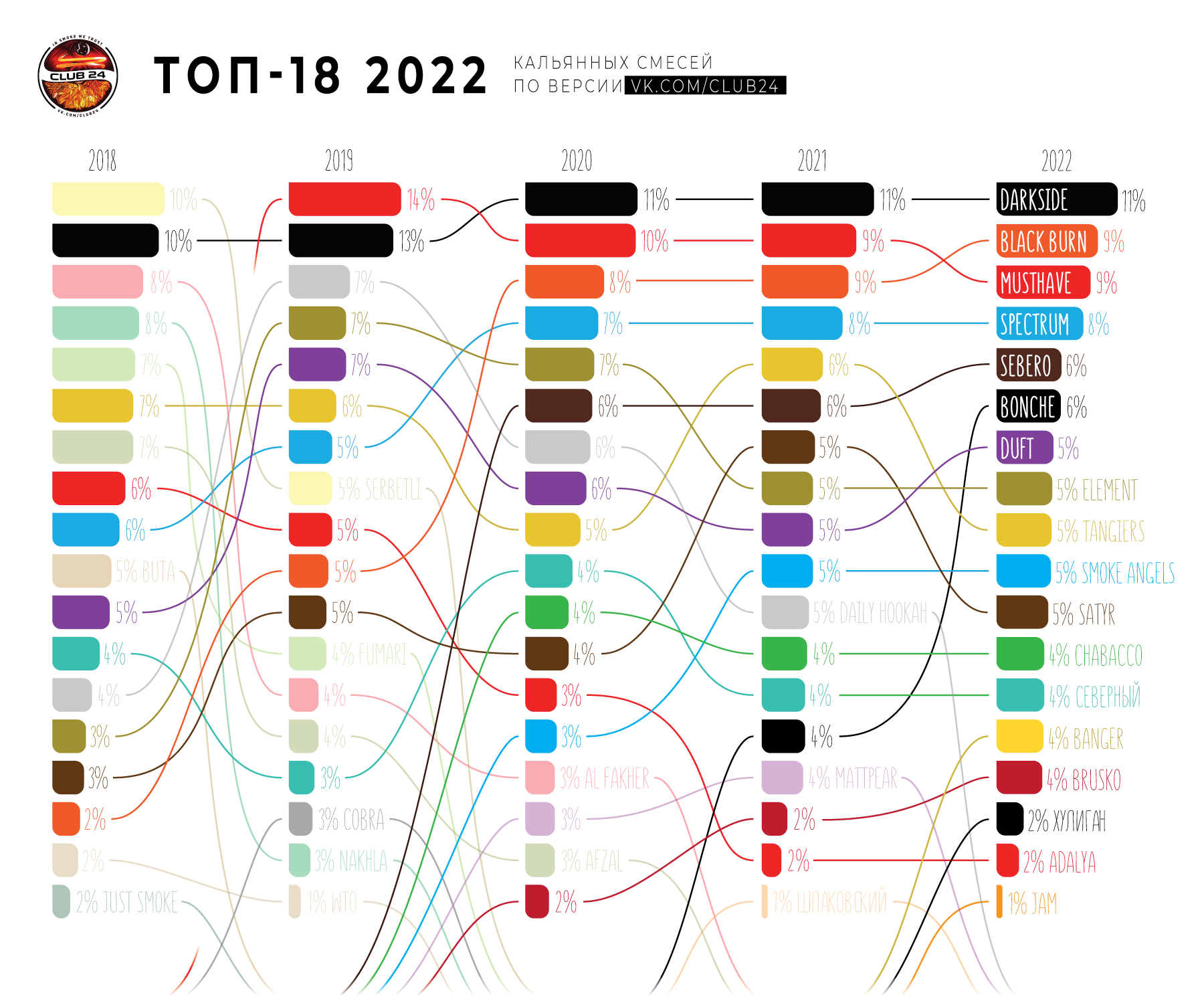
3. Experienced customers — those who usually smoke dark leaf tobaccos, such as Darkside, Black Burn or Musthave.
The most popular hookahs are usually in the price range of around 100 euros, preferably as complete sets. The most commonly chosen colors are black, gold, and silver. Multi-hose smoking is also quite popular, although we usually advise against this solution.
Since the beginning of our store, we have actively selected our assortment. We try not to promote low-quality products or solutions that are not truly useful in practice. Today, we offer around 3,000 different products. We can say that our store has a real influence on what types of products are currently selling in Poland.
We constantly observe trends from all over the world, look for the best solutions and also introduce our own original products. We run a YouTube channel where we educate the community about shisha. In Poland, there have been several shisha bloggers and content creators over the years, but because of the relatively low level of interest in the topic, their activity eventually became unprofitable and they stopped creating content. For the same reason, there are currently no major shisha events or industry gatherings in Poland. We ourselves made two attempts to organize and maintain such events, but due to low attendance, we had to stop.
At the moment, there are two hookah tobacco factories in Poland — Taboo and Al Fakher. Unfortunately, because of the high excise tax rates, fresh batches are regularly available mainly from Taboo, which is also gradually reducing its offer. Al Fakher was available for around four years, but the distributor also tried to expand into the vape segment and later legal changes caused the company serious financial problems.
The shisha market in Poland now seems mature and stable. Despite rising tobacco prices, sales value remains at a similar level, which may suggest that the number of units sold is decreasing. At the same time, thanks to consumers easy access to “exotic” tobacco brands, accessory sales remain stable, and customers are increasingly choosing more expensive and higher-quality products. We are also seeing a trend toward more convenient and potentially less harmful smoking, reflected for example in the strong sales of Xkah electric hookah bowls.
The future of shisha in Poland remains uncertain. This is mainly due to the direction of government policy, which increasingly promotes a healthy lifestyle and treats everything related to smoking and nicotine negatively – while alcohol, at the same time, remains much more socially accepted.
We have already attempted to create the first hookah association in Poland. We hope that, over time, the approach toward smoking products will become more balanced and that it will be possible to begin a real dialogue about changing the way excise tax on hookah tobacco is calculated.
From our perspective, Poland has huge potential, but the further development of the market will depend mainly on regulations, the availability of legal tobacco and consumer education.
Despite all the difficulties and uncertainty, our company will continue to operate, grow, and do everything possible to popularize and develop hookah culture in Poland and across Europe. We believe that through education, careful selection of high-quality products and building a conscious community, shisha can continue to grow in the right direction.
Hi everyone, this is Joyin Cheung, owner and hookah master of Hedonic Exit, also the first hookah battle legend from China. I have been to so many places aroudn the world to smoke shisha. Germany, Spain, Romania, Dubai, Russia, Japan. And I find a very big difference between our culture vs other country.
1. Packing methods
In Hong Kong or China, we tend to use over packing which the tobacco will heavily touching the lotus to create a strong, cloudy, heavy with flavors hookah. But for other countries, I have seen it and tried it and they tend to go for underpacking or below the rim to minimize the touch of the tobacco and lotus. I think this is a big difference between our hookah comparing to other countries which a lot of the people traveling to hong kong might find it very strong for them.
2. Hookah we use
We use mostly russian brand in Hong Kong. We have a very wide range of products that can be found from some local suppliers.
3. Customer preferences
They chase for nicotine,flavor and smokiness over than airflow. The want the nicotine hit so they always want something strong which is why we cater our packing method for them.
4. History
We have had hookah in Hong Kong for over 20years using from traditional alfhka to modern darkside must have and cigar leaves. It got really popular since 2018 and people starting to open lounges and bars since then.
My name is Kiki, and by now I’ve become one of the Hookah Battle Legends. A big part of that came through founding Eden Hookah Club, My Shisha, and MEZZA Space, as well as working as the Head of Marketing for the tobacco brands MEZZA and tombacco.
When we talk about shisha culture in Indonesia, we kind of have to put the word “culture” in quotation marks, because normally culture implies a long-standing tradition — and in Indonesia, shisha has only really been around for about ten years. Since tobacco imports were legalized, the shisha market has been growing steadily, although still on a relatively small scale. That’s mainly because smoking at home is uncommon, and tobacco is still fairly expensive for the average Indonesian budget.
That said, the scene keeps growing. We’re talking about the mega hotspot Bali, where you now find a lot of premium lounges, led by places like EDEN Hookah Club and other Russian-run lounges, but also local restaurants with offering a great mix of shisha, food, drinks, and entertainment — all with impressive interior design and, especially for foreigners, very reasonable prices.
The culture has spread from Bali to the island of Java, and partly to Sumatra, Kalimantan, and Sulawesi as well. It’s also becoming increasingly professional, driven in part by initiatives like shisha academies, for example those offered by EDEN Hookah Club.
Indonesia can definitely pride itself on having one of the largest selections of tobacco brands, especially Russian tobaccos, but also very well-known local brands such as tombacco with its Virginia line or MEZZA with its Burley line. Thanks to imports of shisha equipment — particularly from Russia, Germany, Turkey, and China — the variety of products available has grown massively.
As a result, Indonesia is now in a position to warmly welcome shisha lovers from all over the world, offering a wide selection of blends, flavors, and shisha quality ranging from good to very high quality.
Next time:
1. Different floor plan location of lounges booth – like chess
2. Think about the trouble of people choice paper tags voting – trash cans votes collections cheating
@Medkov Stanislav Other issue: people dont understand the value of voting card. Make somethinging they will dont want to through it away. Livestreams with German blogger and inst posts doesnt help here.
Having visited lounges all over the world, I’d say the UAE has developed a very unique shisha culture of its own.
At its core, shisha here is highly social. Friends, families and colleagues gather around a pipe, but it’s also common to see people smoking while working, taking meetings or spending hours catching up in cafés. In many ways, shisha has become part of the everyday lifestyle.
Over the years, Dubai’s scene has evolved significantly. Traditional Arabic-style smoking is still very much present, but Russian influence has introduced new products, lounge concepts, bowls, HMDs and dark-leaf tobacco. That said, unlike Russia, most smokers in the UAE still prefer blonde leaf and many don’t smoke dark leaf regularly.
What I love most is the sense of community. Through my informal shisha meetups, I’ve seen complete strangers become friends simply because they share the same hobby. We’re also seeing more brands host tastings, product launches and community events, giving enthusiasts opportunities to learn and connect.
Events like World Shisha Dubai have played a huge role in bringing international brands, innovation and awareness to the region, helping position Dubai as one of the world’s major shisha hubs.
If I had one wish for the future of the UAE scene, it would be more dedicated lounge concepts rather than restaurant-based venues. Some of my favourite lounges in Serbia and Russia felt incredibly cozy and authentic—each had its own story, atmosphere and identity. I’d love to see more intimate, well-ventilated, minimalist lounges in Dubai where people can simply relax, connect and enjoy great shisha without feeling like they’re sitting in a restaurant.